What's new in SRTMiniServer 2.7
Version 2.7 puts decoder type and SRT latency on each line, weaves interlaced HEVC in-app, and adds RTMP Enhanced ingest for cameras such as the DJI Osmo Pocket 4.
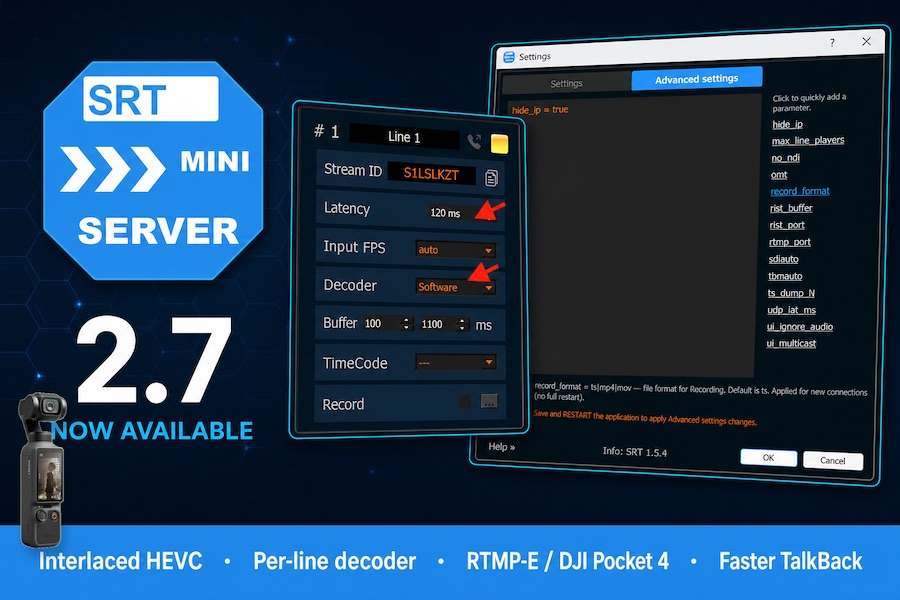
SRTMiniServer 2.7 shipped on 4 September 2026. Until now, decoder mode was a single switch for the whole app. In this release you set Software, HW, or No Decode on the line itself — and the same goes for SRT latency. The rest of the update is practical: interlaced HEVC is assembled inside the app, the built-in RTMP server takes RTMP Enhanced (HEVC), and TalkBackManager return audio arrives sooner.
Decoder and latency, line by line
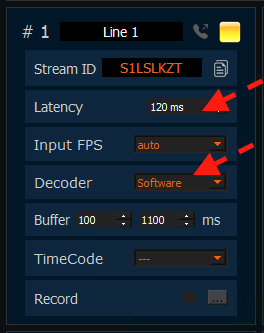
Each incoming line now has its own decoder selector: Software / HW / No Decode. You can keep a heavy HEVC contribution on hardware decode, leave a Routing Pack path on No Decode, and run a third line in software — without changing a global preference.
After an upgrade from 2.6.x, every line comes up in Software. If you relied on HW decode before, turn it back on where you need it. Routing Pack lines remain on No Decode.
SRT latency is per line as well: each line has its own control, not one value for the whole server.
Interlaced HEVC, assembled in the app
Interlaced HEVC often arrives as half-height fields. 2.7 weaves those fields into a full interlaced frame before the rest of the pipeline sees them, so the picture stays consistent instead of depending on how a particular decoder emitted the fields.
RTMP Enhanced (HEVC) and DJI Osmo Pocket 4

The built-in RTMP server now accepts RTMP Enhanced streams with HEVC. That includes the DJI Osmo Pocket 4 — no extra gateway between the camera and the studio.
Mass-market action and pocket cameras are what reporters already carry. Being able to stream from them over RTMP opens remote reports that used to need a backpack encoder: a correspondent on LTE, a second camera at an event, a tight interior — contribution-quality picture from a device that fits in a jacket.
Pocket 4 is the camera we tested for this path. (more »)
TalkBackManager: shorter path for return audio
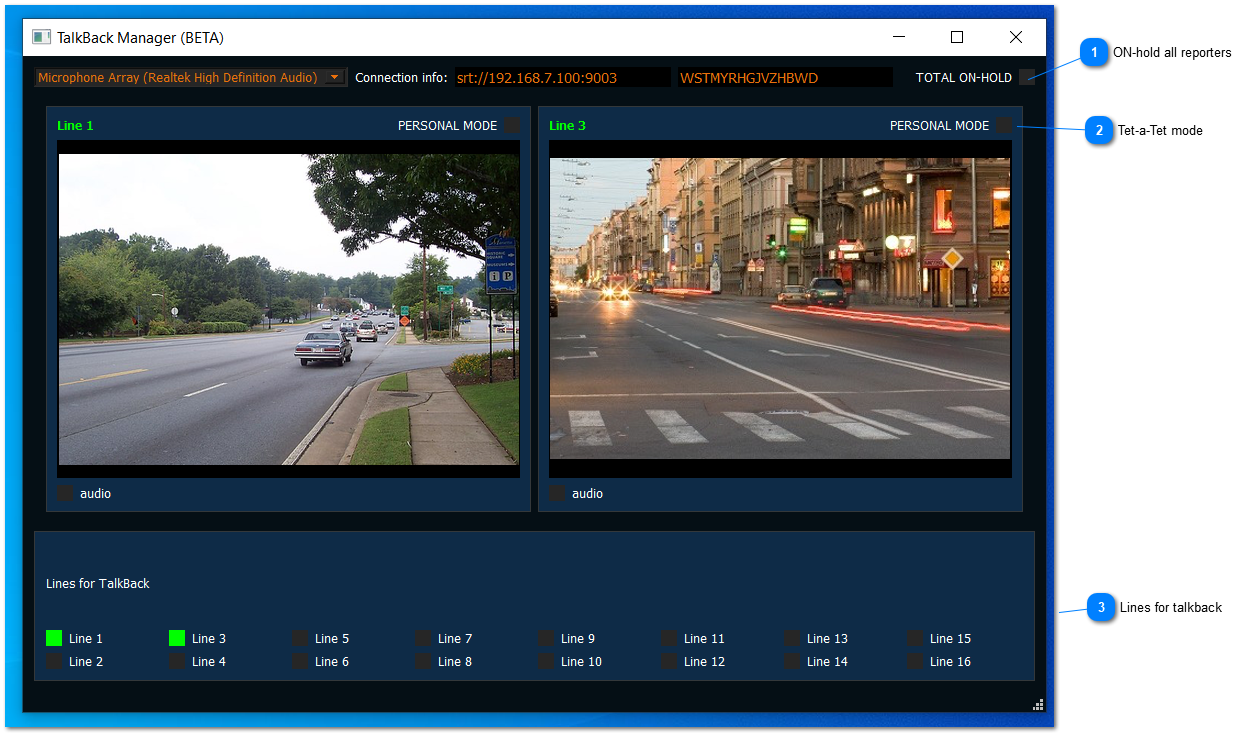
TalkBackManager sends return audio to the reporter with lower delay than before. Same addon, less wait on the return.
As a reminder: TalkBackManager is for talking to several reporters at once. It can send them video and audio return, so two-way communication stays simple. The return can take NDI and other sources. (more »)
Advanced Settings: click a parameter to add it
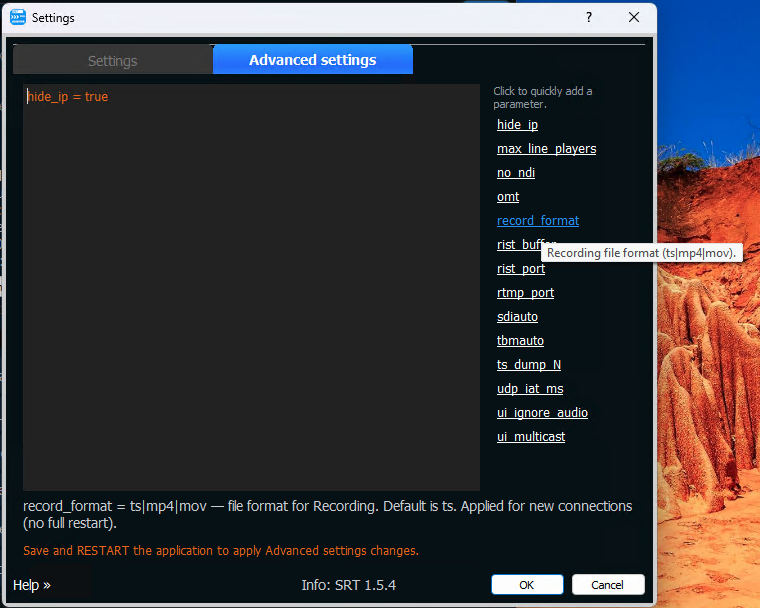
Advanced Settings now lists every available parameter next to the editor. Click a name to insert it with the default value; click again to drop it. The RESTART warning is shown only when that parameter actually needs a restart. (more »)
Ignore Audio and Multicast to stay out of the line UI unless you enable them: ui_ignore_audio = true and ui_multicast = true. While they are hidden, they do nothing — audio is not ignored, and no multicast destination is used. You do not need to restart the app; a running line picks the change up the next time that line starts.
Internal processing: FFmpeg 8.1.2
This is an internal update: the processing pipeline now runs on FFmpeg 8.1.2. Decode and the rest of that chain sit on the new library, with the stability and performance that come with it.
Bugs fixed
- Grey picture on some streams: a decoding issue that left a grey frame instead of video.
- Disconnect on a dead Caller: if the line pointed at an unreachable address, Disconnect did not stop it — the line kept coming back as active. That loop is gone.
Installer and the 21-day trial: srtminiserver.com/download . Full list: SMS release notes.