SRT to RIST
SRT to RIST gateway — convert SRT streams to RIST with bonding.

Why we created this project
The RIST protocol offers excellent opportunities for aggregating bonding. This particular type of bonding is not available in the SRT protocol.
At the same time, SRT is already widely adopted in encoders and cameras, with well-deserved popularity.
That’s why we created SRT-to-RIST: a bridge that lets you leverage the strengths of both SRT and RIST seamlessly.
How it works
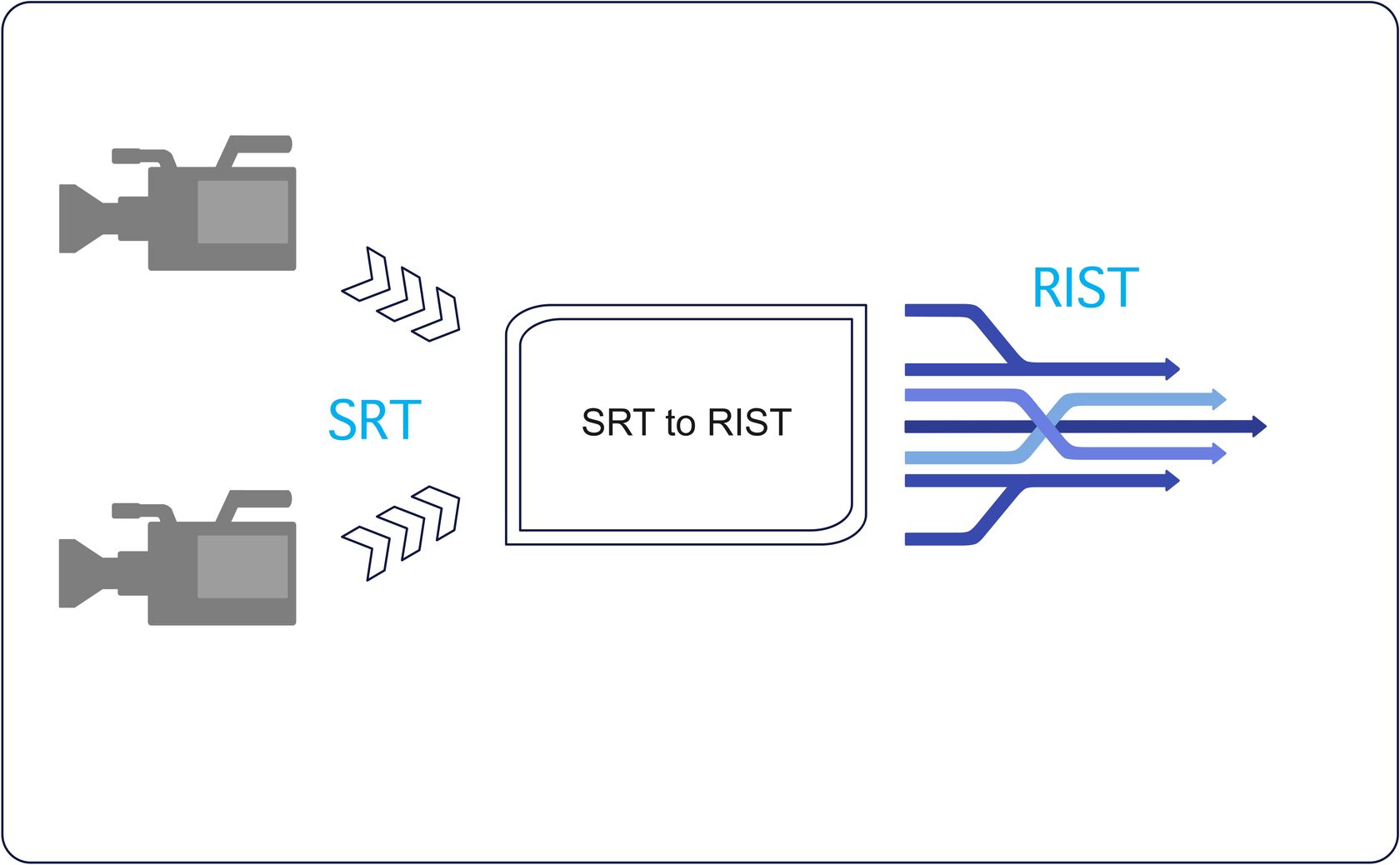
When you launch SRT-to-RIST, it starts an internal SRT server to accept incoming SRT streams.
Once connected, SRT-to-RIST processes the data in real time and transmits it via RIST to the RIST endpoint(s) using the available network interfaces.
You can specify multiple RIST endpoints if you need to deliver a signal to multiple locations.
For example, you can use an SRT Mini Server as a RIST endpoint.
Key advantages of RIST
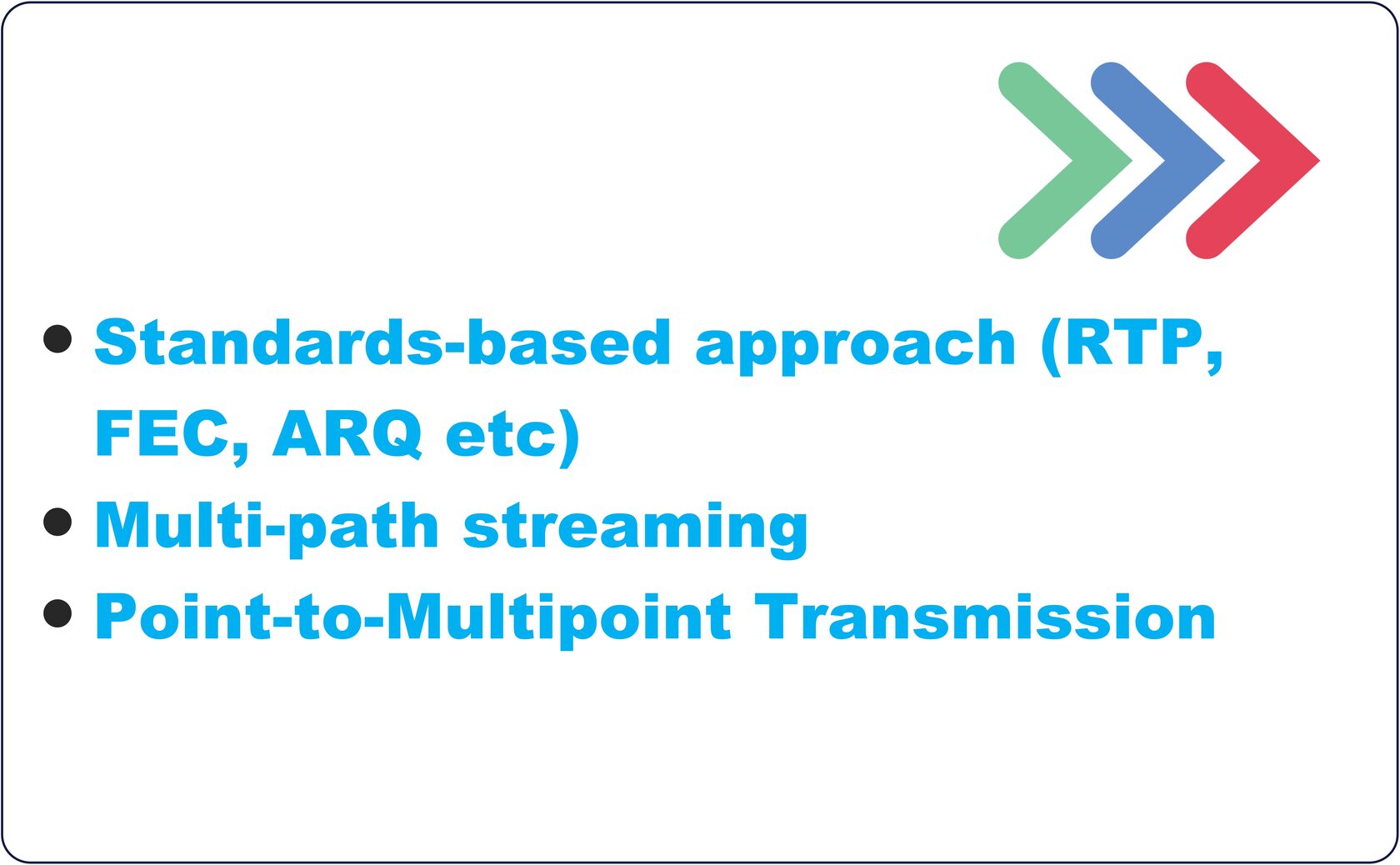
- Multi-path support: bonding for bandwidth aggregation or redundancy for failover.
- Flexible deployment: works in adaptive or redundant modes.
From our perspective, the RIST protocol is ideal for bonding solutions. It enables both aggregated bonding and configurable failover mechanisms with exceptional flexibility.
More info about RIST: https://code.videolan.org/rist/librist

Open source and cross platform
SRT-to-RIST is an open-source solution built in C++, ensuring cross-platform compatibility.
The only dependencies are the SRT and RIST libraries.
Improved successor to SRT Bonding Agent.
Unlock the power of both protocols for bonding.
Download
User guide: SRT to RIST guide
ZIP-version, no installer required. Just unpack and use.
Questions? Support@GaraninApps.com